Loss Adjuster vs Loss Assessor: What’s the Difference and Why It Matters
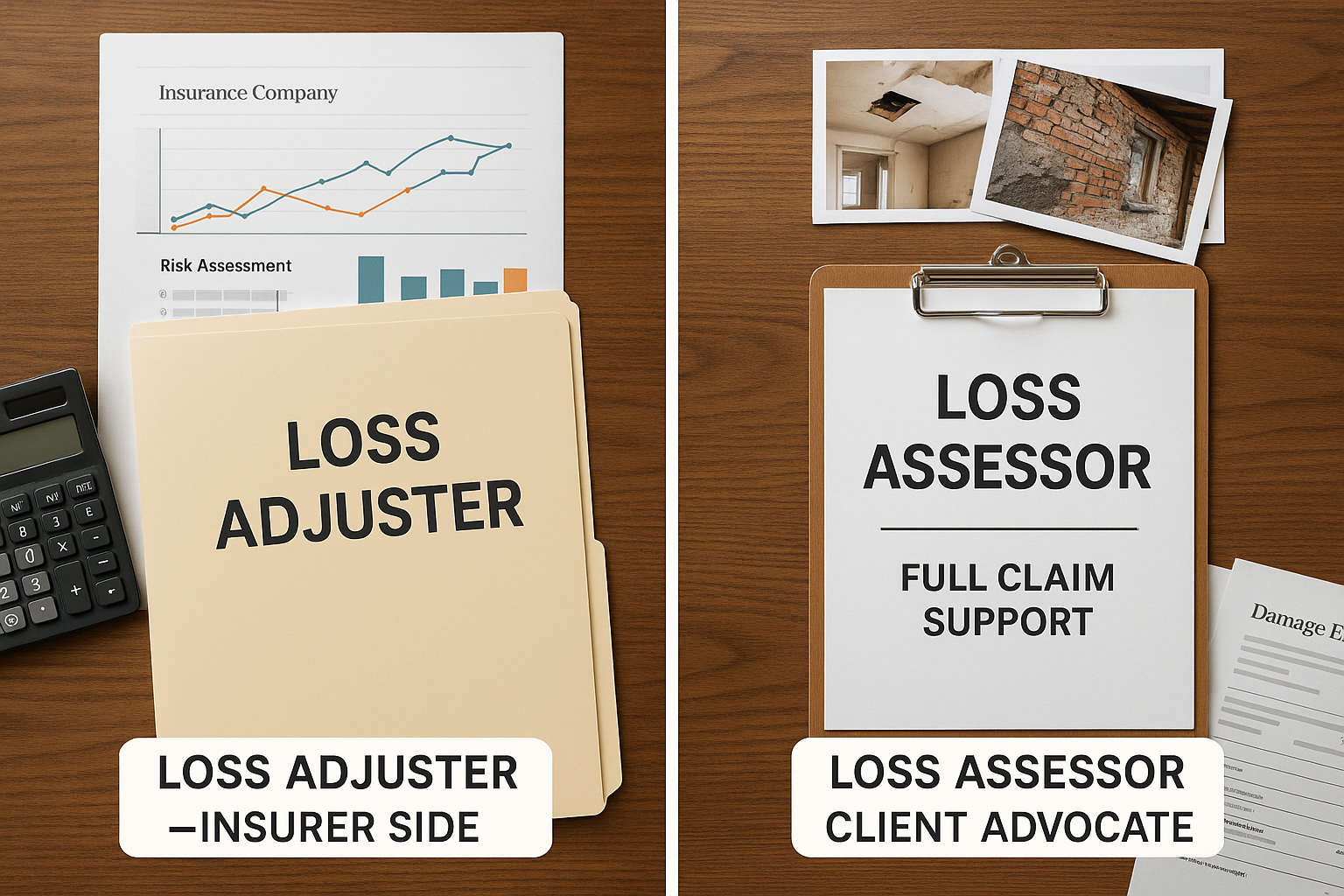
When you make an insurance claim, you may hear both the terms Loss Adjuster and Loss Assessor. Although they sound similar, these roles serve very different purposes—and knowing the difference could have a major impact on the outcome of your claim. Understanding who works for whom, what each professional is responsible for, and how they influence your settlement is essential if you want to ensure your interests are properly protected.
What Is a Loss Adjuster?
A Loss Adjuster is appointed by your insurance company to investigate your claim. Their role is to assess the damage, determine if your policy covers the loss, manage the claim on behalf of your insurance company and recommend how much should be paid out.
While they are qualified professionals—often with backgrounds in surveying or claims management—they are not independent in the truest sense. Their priority is to protect the insurer’s interests, validate claims, and minimise unnecessary costs. They may visit the property, examine documents, and question the circumstances of the incident before preparing a report for the insurer.
In simple terms, they help the insurer decide whether to pay and how much to pay.
What Is a Loss Assessor?
A Loss Assessor, by contrast, is appointed by you, the policyholder. Sometimes known as a Claims Consultant, their job is to handle your insurance claim from start to finish, representing your interests throughout the process.
Loss Assessors work to ensure you get the maximum entitlement under your policy. They take on the burden of gathering evidence, managing communications with the insurer, responding to queries from the Loss Adjuster, and negotiating a fair settlement. If you’re dealing with a complex or high-value claim—or simply don’t want the hassle of going it alone—a Loss Assessor can be invaluable.
Why Does the Difference Matter?
The key issue is representation. A Loss Adjuster works for the insurer. A Loss Assessor works for you, the claimant. That distinction matters greatly when disagreements arise over the value of the claim, what is covered, or how the loss should be repaired or replaced.
Without a Loss Assessor, you may find yourself outmatched—especially if the insurer questions parts of your claim. By having professional support on your side, you level the playing field and ensure that your voice is heard during negotiations.
Do You Need Both?
You don’t hire the Loss Adjuster—the insurer does. But you have every right to bring in a Loss Assessor to support your side. In fact, Loss Assessors are frequently used in cases involving:
- Fires, floods or significant property damage
- Disputed or rejected claims
- Business interruption or commercial losses
- Complex documentation requirements
- Time-sensitive repairs or temporary accommodation needs
In many cases, the value they bring far outweighs the fee they charge.
Step-by-Step Summary
- You report the claim to your insurance company.
- The insurer appoints a Loss Adjuster to investigate.
- You may appoint a Loss Assessor to represent your interests.
- The Loss Adjuster prepares a report for the insurer.
- The Loss Assessor reviews the findings, adds missing details, and negotiates on your behalf.
- The claim is settled—ideally with a fair outcome for all.